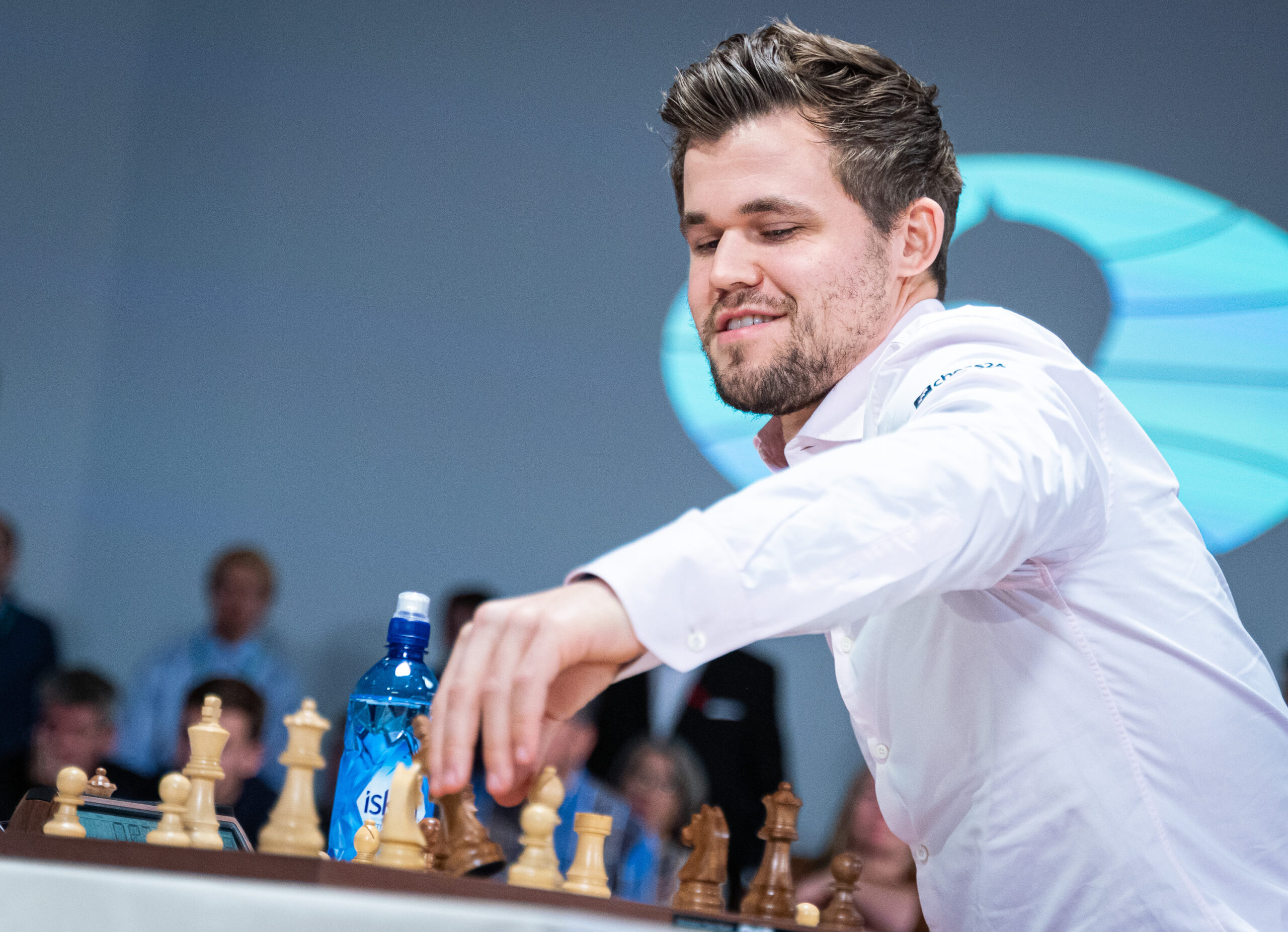
Chess is having a moment—and the world’s greatest player is helping make sure it lasts.
If you have been near a board game table in the last five years, you have seen the drift: Wingspan players get curious about heavier strategy. Terraforming Mars fans flirt with longer, more cerebral nights. And in the background, chess—that ancient 64-square obsession—has roared back into cultural relevance. Blame the internet, a hit Netflix show, and one Norwegian prodigy who refuses to let the game stand still.
This is the story of chess, Magnus Carlsen, and why this roughly 1,500-year-old board game might be the most important one you ever introduce to your kids.

Also on this site: Best solo board games 2026 · Gateway board games · BGG hotness March 2026
Forum pulse: why hobbyists care again
You will see the same threads everywhere—from BoardGameGeek abstract-game discussions to r/boardgames and r/chess:
- “I burned out on rules-heavy euros for a month and only played chess—turns out I still love pure decisions.” (Typical BGG abstract-strategy sentiment.)
- “Started with Catan → Wingspan → now I’m doing puzzles on Lichess every lunch.” (Common Reddit gateway-to-hobby arc.)
- “Is chess a board game?” Yes—and it is the one title you can explain in five minutes and play for life. (r/boardgames recurring debate, usually settled quickly.)
These are not quotes from a single post—they reflect recurring community patterns worth taking seriously: modern hobbyists are primed for chess because they already value depth, planning, and skill.
The most important board game ever made
Before we get to Magnus, give chess its due.
Chess is, at its core, a board game—arguably the board game. It belongs beside Go, Shogi, and checkers among the great abstract strategy games. If you love the depth of Gloomhaven or the engine-building of Everdell, chess is an ancestral root of a lot of what modern design celebrates: perfect information, no luck, and outcomes driven by decisions.

A brief history
Chess likely originated in Gupta-era northern India around the 6th century CE as chaturanga—Sanskrit for “four divisions of the military” (infantry, cavalry, elephants, chariots). It moved west through Persia (chatrang / shatranj) and into Europe via the Islamic world.
In medieval Europe, pieces took new cultural meanings—the vizier became the queen, the elephant the bishop, the chariot the rook. Modern rules largely stabilized by the 15th century; organized competition matured in the 19th century, leading to the first official World Chess Championship in 1886.
For more than a century, that title has produced dramatic intellectual duels—Kasparov vs. Karpov, Fischer vs. Spassky—and now an era shaped heavily by one player.
Buy (history & culture): David Shenk — The Immortal Game (Amazon search)
Enter Magnus Carlsen: prodigy to phenomenon

Magnus Carlsen was born 30 November 1990 in Tønsberg, Norway. He learned chess at eight and rose with rare speed: grandmaster at 13, world No. 1 by 2010 at 19. He has been FIDE world No. 1 continuously since 2011, with multiple classical world titles, plus rapid and blitz crowns. His peak Elo (2882) remains one of the highest marks in history.
What stands out is style: where some elite players lean on opening memorization and engine prep, Carlsen built a reputation for grinding, intuition, and endgame mastery—finding resources in positions that look dry, squeezing wins from small edges.
And he is not done: Carlsen has spent the last several years building companies around chess—not just playing it.
Instagram: #magnuscarlsen · #worldchesschampion
Building an empire: Carlsen’s chess startups
Play Magnus & the Chess.com acquisition
Play Magnus Group (Oslo) bundled apps and media properties including Chess24. In 2022, Chess.com acquired the group—consolidating much of the online chess stack. Carlsen’s role shifted toward ambassadorship and promotion on Chess.com’s side, which later created real business tensions when he backed competing products (more below).
Forum note: On r/chess, acquisition threads often split between “monopoly worries” and “finally one login”—both reactions show how central online play has become.
Freestyle Chess: venture-backed Chess960
In July 2024, Carlsen and Jan Henric Buettner announced Freestyle Chess with roughly $12 million from Left Lane Capital (widely reported by Chess.com, ChessBase India, and trade press). The format leans on Fischer Random (Chess960): randomized home-rank setups to bust opening-by-rote and foreground creativity from move one.
Instagram: #chess960 · #fischerrandom
Take Take Take: fantasy, learning—and Lichess in the stack
What began as Fantasy Chess evolved into Take Take Take (TTT), a fan engagement and improvement platform. Industry reporting (e.g. Nordic 9) describes venture rounds involving firms such as Coatue and SNÖ Ventures; the company’s own FAQ states it raised a founding round plus seed totalling around 36 million NOK and—critically—that Lichess is TTT’s infrastructure partner for the Play zone, giving pairing and a large player pool while TTT focuses on structured learning and progress tracking.
That setup matters for readers: Chess.com and Lichess are not identical products, and TTT is explicitly positioning around improvement, not “another lobby screen.”
Chess startup scene (snapshot): Other founders and GMs are building analytics and training tools—worth watching if you follow chess like you follow board game Kickstarters.
Instagram: #taketaketake · #lichess · #chesscom
Chess as a board game: why it belongs on your shelf
Chess can feel like the game you should love—without minis, card art, or expansions. Strip the chrome and the overlap with modern euros is obvious: interlocking decisions, consequences, lookahead, and the satisfaction of a plan that clicks.
Accessibility is unmatched: rules on one page, equipment for pocket change, and a global player base. Lichess and Chess.com mean a game in seconds, any hour, any level.
Forum tip (r/chessbeginners, paraphrased often): “You don’t need 15 books—you need pattern recognition and slow games.” That is the same advice veteran board gamers give about one heavy title: depth beats breadth early on.
Buy (starter set): Amazon — tournament roll-up chess set
Chess for kids: age-by-age
Chess for Ages 4–6: introduction
Use pawn games (pawns only, race to promotion) or add one piece type per session. Goal: fun, rules, patterns—not mastery.
Chess for Ages 6–9: strategic foundation
Sweet spot for starting in earnest. Studies in several countries link chess instruction to gains in math reasoning, reading focus, memory, and sportsmanship—because every game ends with a handshake and visible mistakes.
Buy: Chess for Kids — Michael Basman (Amazon search)
Chess for Ages 9–12: competitive window
School clubs and tournaments offer rare meritocratic competition—size and speed matter less than thinking.
Online: Chess.com kid-friendly lessons · Lichess puzzles (free) · structured apps per your family’s rules on accounts/screen time.
Chess for Ages 12–17: depth & resilience
Long games train patience and emotional regulation—a useful counterweight to short-form feeds. Clubs tend to be diverse and welcoming relative to many youth activities.
Instagram: #chesskids · #scholasticchess
The bigger picture: chess and the board game renaissance
Chess is thriving alongside the modern tabletop revival—Catan, Pandemic, Ticket to Ride, then Spirit Island, Gloomhaven, Wingspan. Same hunger: skill, social play, meaning beyond a scroll loop.
Streaming, The Queen’s Gambit, and pandemic-era online chess made the hobby visible again. Carlsen’s ventures bet that spectacle (Freestyle) and on-ramps (TTT + Lichess) can keep that momentum.
Instagram: #chess · #queensgambit · #boardgames
Starter pack: learn, play, go deeper
| Need | Pick |
|---|---|
| Free play & puzzles | Lichess.org |
| Lessons & scale | Chess.com |
| Physical kit | Roll-up board + weighted plastic pieces |
| Kids’ book | Chess for Kids (Basman) — Amazon search |
| Serious study | My System (Nimzowitsch) · Silman’s Complete Endgame Course — Nimzowitsch · Silman |
Final move
Magnus Carlsen helped prove what classical chess can be—and is now helping rebuild the ecosystem around it: Freestyle for watchable, creative elite chess; Take Take Take for fans and improvers; Lichess still anchoring open play for millions.
For board gamers, that is good news: more tools, more culture, more on-ramps. For kids, there has rarely been a better time to set up the board, teach the knight’s zigzag, and let them discover the oldest board game in the room still has teeth.
Related reading
- Best solo board games 2026 — Deep solo nights after the kids are in bed—chess pairs well with these picks.
- Perfect gateway board games — Family-friendly steps into the hobby beyond the 64 squares.
- BGG hotness (March 2026) — What the wider hobby is clicking on alongside classics like chess.
- Board games like GTA & Red Dead — When you want cinematic stakes and emergent stories at the table.
The clock is ticking. White to move.
Part of our series on strategy games and modern tabletop culture.
Leave a Reply