
Ultimate Werewolf Review (2026): The Party Game for a Full Room
If you have ever played Mafia at a hostel, a college fest, or an office offsite, you already know this game. Someone closes the lights, the werewolves pick a victim, the village argues, and a friend gets voted out while insisting they are innocent. Ultimate Werewolf, designed by Ted Alspach and published by Bézier Games, is that night in a box: a moderator, a stack of secret roles, and a room full of people trying not to get eaten.
The useful question in 2026 is which box you actually want. Indian meetup calendars use "Ultimate Werewolf" and "One Night Ultimate Werewolf" as if they were the same title. They are not. This review is about the longer, moderator-led game, and it says plainly when the ten-minute One Night box — or Blood on the Clocktower — is the better buy.
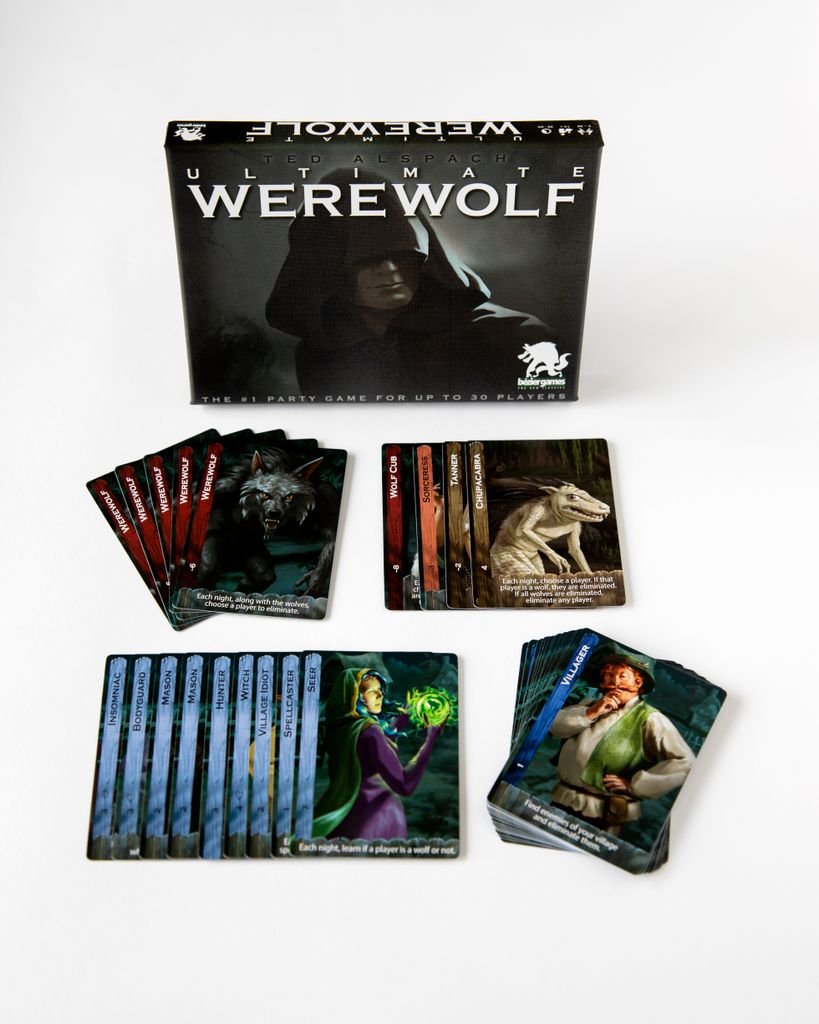
The 30-second verdict
- Buy it if: you regularly have 8–15 people in a room, someone is happy to moderate, and the group likes accusations, alibis, and a story you will retell on the way home.
- Skip it if: you usually play with 4–6 people, nobody wants to sit out, or your table hates player elimination.
- Buy One Night instead if: you want the same theme in about 10 minutes, with an app instead of a moderator.
- India price: the entry box has recently listed around ₹2,000–2,500. Stock moves; check a current listing before you travel for it.
At a glance
| Detail | Fact |
|---|---|
| Players | 5–25 with roles, plus a moderator who does not play. Best around 8–15. |
| Time | 30–90 minutes, depending on headcount and how long the arguments run |
| Age | 13+ |
| Complexity | About 1.2 / 5 on BoardGameGeek — the rules are light; the social play is the game |
| Designer | Ted Alspach |
| Publisher | Bézier Games |
| Core hook | Hidden teams, a night phase run by a moderator, and a daytime vote |
Figures are for the current entry-level Ultimate Werewolf box. Bézier's own edition guide puts that box at 34 role cards and groups of up to 25. The older Ultimate Edition and the later Extreme line go much bigger. More on which box to buy below.
How a game actually feels
You need one person who is willing to run the night and not play. That moderator deals a secret role to everyone else, then walks the table through days and nights.
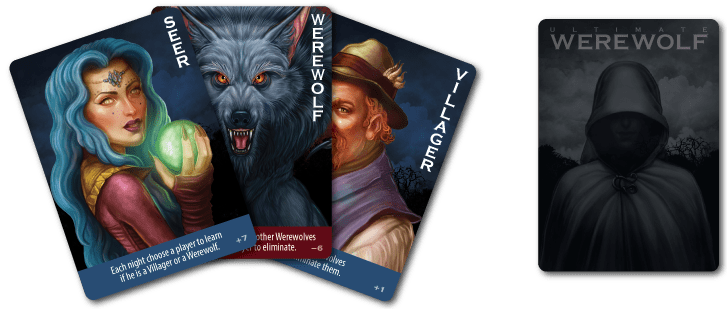
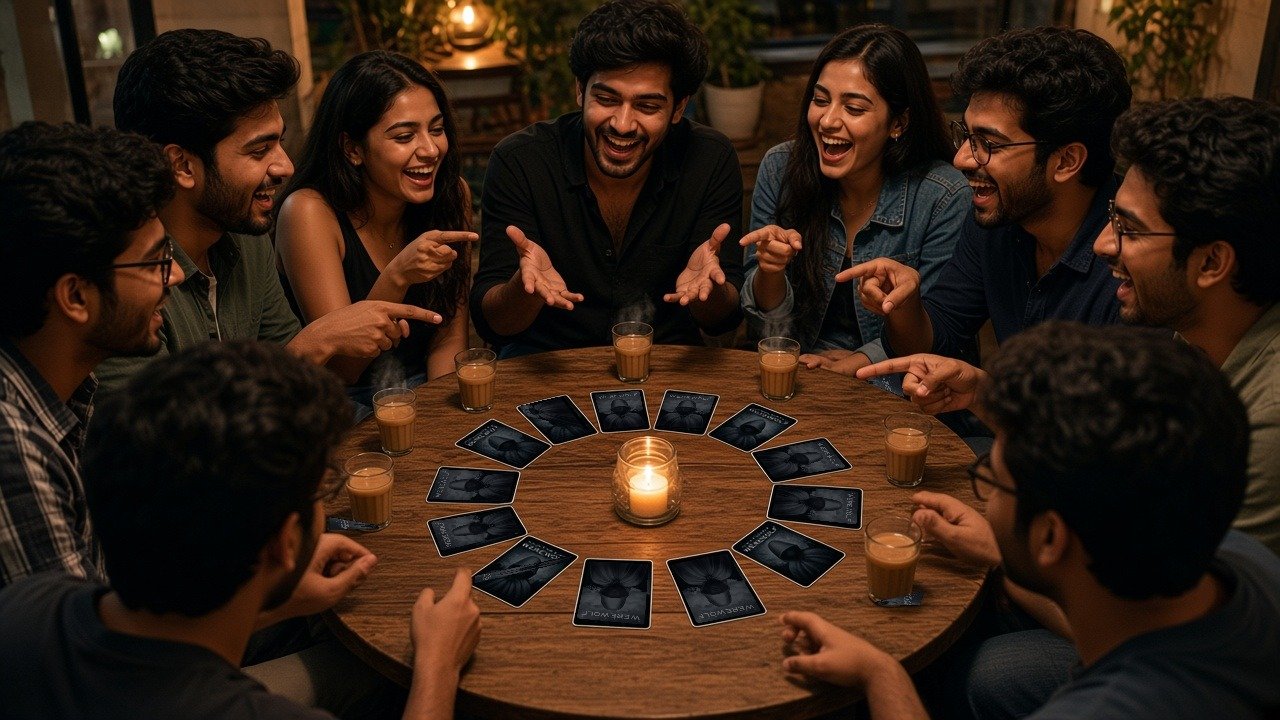
At night, eyes close. The moderator wakes the werewolves, who silently agree on someone to eliminate. Special roles wake in turn. The Seer, the role every new table remembers, points at one player and learns whether that person is a werewolf. Other roles protect, investigate, or muddy the result, depending on which cards you dealt. Then morning comes, the village hears who died, and the room spends the next several minutes doing the only thing that matters: talking.
Someone is too quiet. Someone is too helpful. Someone remembers a detail they should not know. The village votes one player out. If that player was a werewolf, the village is closer to winning. If they were a villager, the wolves just got fed for free. Nights and days repeat until one team is gone. Bézier's current rules end the game when every villager or every werewolf has been eliminated.
Most cards are ordinary Villagers or Werewolves. The spice is a short list of special roles. The publisher calls out the Seer, the Bodyguard, the Hunter, and the Tanner as the classics in the entry box. The Tanner is the chaos card: a player who wants the village to vote them out. That single role is enough to make a confident accusation feel dangerous, because the loudest "I am a villager" in the room might be someone trying to get lynched.
A good moderator makes this feel like theatre. A distracted moderator makes it feel like a rules argument in the dark. That is the whole product.
Why a full room loves it
It teaches in one round. Anyone who has played Mafia can sit down immediately. Anyone who has not can learn it while the first night happens. There is no board to parse and no iconography to memorise.
It is built for the headcount Indian parties actually have. A birthday, a society night, or a meetup that overshoots eight people will break Catan and Ticket to Ride. Ultimate Werewolf gets better as the circle gets bigger, up to the point where the moderator can still track who is alive. That is why social-deception nights keep showing up on Indian calendars — including groups that list Ultimate Werewolf next to Secret Hitler and Coup. The wider scene is mapped in the board game meetup field guide.
The stories are the scoring. Nobody frames a photo of the final vote tally. They remember the friend who survived three accusations, or the Seer who told the truth and got eaten for it. That is the same reason social deduction shows up beside chess when people want a different kind of difficult evening: you are reading people, not a position.
The box is cheap for what it does. In the US, Bézier sells the entry game for about $15. In India, hobby and toy listings for that box have recently sat around ₹2,000–2,500 — Blue Balloon Toys had it at ₹1,999, down from ₹2,499, the last time the listing was checked. For a game that can occupy 12 people for an hour, that is a small spend next to a heavy euro.
You can grow it later. Card backs in the current line carry QR codes for the Ultimate Werewolf Moderator app, and the entry set is compatible with Extreme, Bonus Roles, and Pro. You do not need any of that for the first ten games.
The honest downsides
A review that only lists the shouting is not a review. These are the reasons groups bounce off Ultimate Werewolf, and they are consistent:
- Someone has to moderate. The moderator is not on a team. If your group is six friends who all want to play, you do not have a moderator. The app can call the night script, which helps, but a person still has to track deaths, roles, and the pace of the argument.
- Player elimination is the design. Die in the first five minutes and you are watching, or scrolling, until the village finishes. With a big, loud group that is part of the fun — dead players become the audience. With a small group, or with guests who came to play, it feels rude. This is the single biggest reason people move on to One Night, Avalon, or Blood on the Clocktower.
- It can get personal. The game asks you to call your friends liars. That is delightful with a table that likes it and miserable with a table that does not. A moderator who lets accusations turn into real grudges has picked the wrong game for that room.
- Special roles can swamp a first game. The entry box includes plain Villagers for a reason. Dealing every special card into a seven-player game produces a night the moderator cannot explain and a morning nobody can follow.
- The big editions are a trap for new groups. Extreme and the collector boxes add tokens, scorepads, and well over a hundred extra roles. They are for a host who already runs Werewolf every month. They are a poor first purchase.
Ultimate Werewolf, One Night, or Blood on the Clocktower?
| Ultimate Werewolf | One Night Ultimate Werewolf | Blood on the Clocktower | |
|---|---|---|---|
| Players | 5–25, plus a moderator | 3–10 | 5–20, plus a Storyteller |
| Time | 30–90 minutes for one game | About 10 minutes a round | 60–120 minutes |
| Moderator | Yes, or the moderator app | No — a free app runs the night | Yes, and the Storyteller is doing real work |
| Elimination | Yes, and it lasts | No | You die and keep playing |
| Best Indian use | Hostel night, society party, meetup that drew a crowd | Weeknight with the regular group | A dedicated social-deduction club night |
| Typical local price | Around ₹2,000–2,500 when listed | Often easier to find; budget roughly ₹1,500–2,300 | A full kit is many times the price, and often hard to get |
One Night Ultimate Werewolf is the game most Indian shops and meetup lists actually mean. Everyone closes their eyes for a single scripted night, roles can move, and then you have a few minutes to find a werewolf. Lynching one werewolf wins. Nobody sits out. It is the right box when the same six friends want three rounds before dinner. It is the wrong box when 14 people are standing in a circle and want a full evening.
Blood on the Clocktower is the game communities graduate to. Dead players stay in, every seat has a unique character, and the Storyteller is allowed to mislead poisoned or drunk players. It is also expensive and scarce in India, which is why it lives at clubs rather than on family shelves. If that is the night you want, start with the city guide to Blood on the Clocktower. Ultimate Werewolf is the game you play while you are still finding out whether your group likes the genre.
Avalon and Secret Hitler sit in the middle: hidden teams, little or no elimination, and a proper board-game length. Reach for those when you have 6–10 dedicated players and no appetite for a moderator calling nights. The meetup starter list is the practical shopping order if you are building a club library from scratch.
Which Ultimate Werewolf box to buy
Buy the entry Ultimate Werewolf (about 34 role cards, up to 25 players) unless you already moderate this game in public.
Ultimate Werewolf: Extreme includes those 34 cards plus 54 more, and Bézier pitches it for groups as large as 75 across three simultaneous games. It adds the Ivory Tower token, a moderator scorepad, and a tray. Worth it for a café or a campus club that runs Werewolf as a headline event. Unnecessary for a flat.
The Collector's and Super Collector's editions stack Bonus Roles, Pro, artifacts, sleeves, and props on top of Extreme. They are enthusiast kits. Skip them until the entry box is worn out.
Leave One Night Ultimate Werewolf and One Night Ultimate Werewolf: Daybreak in a separate pile. Daybreak is an expansion for One Night, not for the multi-night game. Mixing the names at checkout is the most common way to come home with the wrong box.
Hosting it in India
A few habits separate a good Werewolf night from a fight:
- Seat 8–15 people with roles. Five can play. It is thin. Past about 15, the moderator needs the app and a firm hand, or the votes become noise.
- Deal a small role set the first time. Werewolves, Villagers, Seer, and one protective role are enough. Add the Tanner once the table understands that dying can be a plan.
- Say the tone out loud before the first night. Accusations stay about the game. Anyone can pass on playing. This matters more at a mixed office or family gathering than at a meetup full of regulars.
- Decide what dead players do. The clean house rule is: reveal your card, stay quiet, enjoy the show. Letting eliminated players keep arguing hands the game to the audience.
- Try it at a meetup before you buy Extreme. Cities that already run social-deduction nights — Jaipur tables list Werewolf next to Secret Hitler, Ahmedabad libraries include it, Bangalore groups advertise it — are the cheapest way to learn whether your friends want this at all. Start with the Jaipur and Ahmedabad night guides, then ask the host what is actually on the table that week.
FAQ
Is Ultimate Werewolf the same as One Night Ultimate Werewolf? No. Ultimate Werewolf is a 30–90 minute game with a moderator and player elimination. One Night is a separate 10-minute game for 3–10 players, run by an app, with no elimination.
How many people do you need? At least five players with roles, plus someone to moderate. The game is at its best with about 8–15 people holding cards.
Does it need a moderator? Yes. That person is not on a team. Bézier's moderator app can call the night order, which is worth using if you are new, but someone still has to run the vote and the pace.
Is it good for kids? The box is rated 13+. The rules are simple enough for younger teens who can handle being accused and voted out. It is a poor fit for a children's game night.
Should I buy Extreme first? No. The entry box is the right first purchase. Extreme is for a host who already runs large Werewolf nights.
What should I buy if my group is only four to six people? One Night Ultimate Werewolf, or a hidden-team game such as Avalon or Coup. The multi-night box wants a crowd.
Final word
Ultimate Werewolf earns a place in a party shelf because it does one job cleanly: it turns a full room into a village for an hour. The rules are almost free. The cost, in India, is modest when you can find the entry box. The cost in people is a moderator and a group that is fine with sitting out.
If that describes your Diwali weekend, your society night, or the meetup that always overshoots, buy the small box and deal the Seer. If it describes a weeknight with five friends, buy One Night and leave this one for the crowd.
Related reading
- Blood on the Clocktower in India — the social-deduction night clubs graduate to, and where to find a seat.
- Board game meetup field guide (2026) — why deception games keep headlining Indian calendars.
- How to start a board game meetup in India — a buying order that includes One Night, Avalon, and Blood on the Clocktower.
- If you like chess, these games will melt your brain — Avalon, Secret Hitler, and the deduction end of the hobby.
- Board game nights in Jaipur and Ahmedabad — cities where Werewolf already shows up on the library list.