Spine
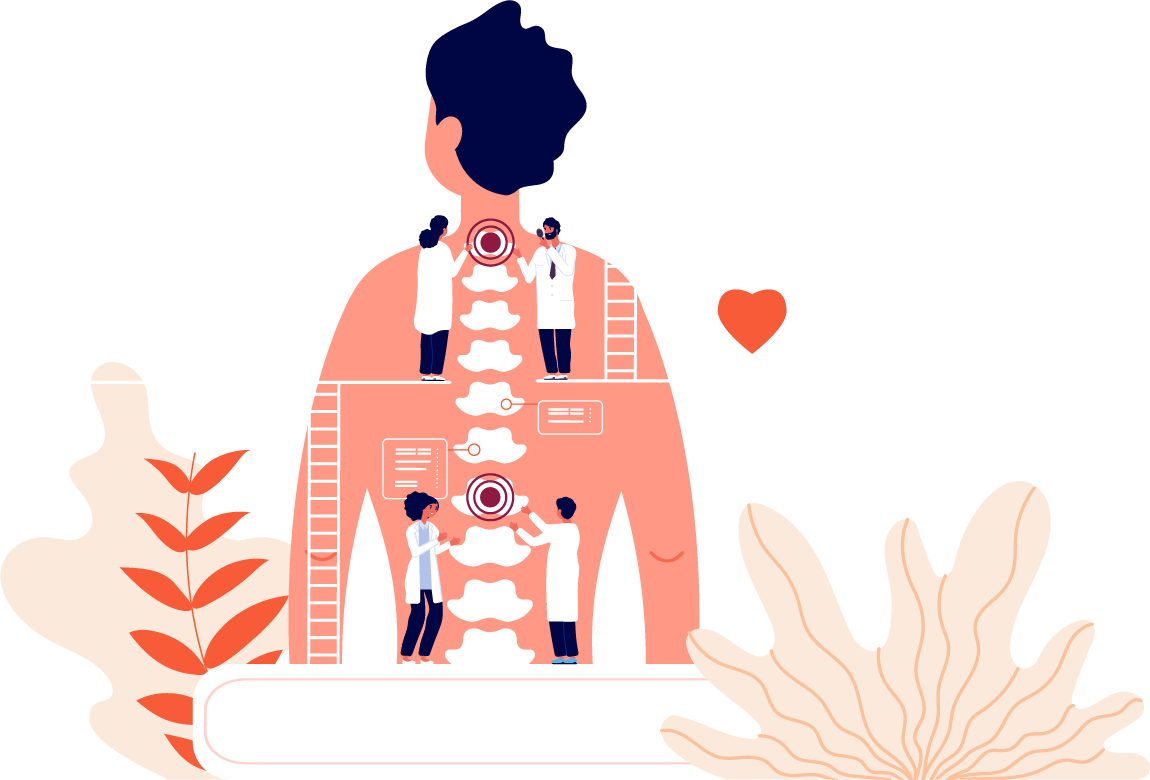
Spine is one of the most crucial and complex structures of the body. This is the only organ which can
provide stability and flexibility to our body at the same time as it forms the core of our skeletal
system. Because of its complexity, subtle changes in its structure can lead to major problems. It gives
support to entire body, provides stability by transferring weight from torso to pelvis to legs. It is
also a major shock absorbing structure and disc between two vertebral bodies is the most crucial
structure providing shock absorption. Another crucial function is protection of spinal cord and nerves.
Spinal cord traverses through the entire length of vertebral column.
At ‘Swasti’, we understand how something often dismissed as 'only back pain' can have a massive impact
on quality of life. And we provide expertise and excellence in non-operative as well as operative
management of any kind of spine disorders.
Spine
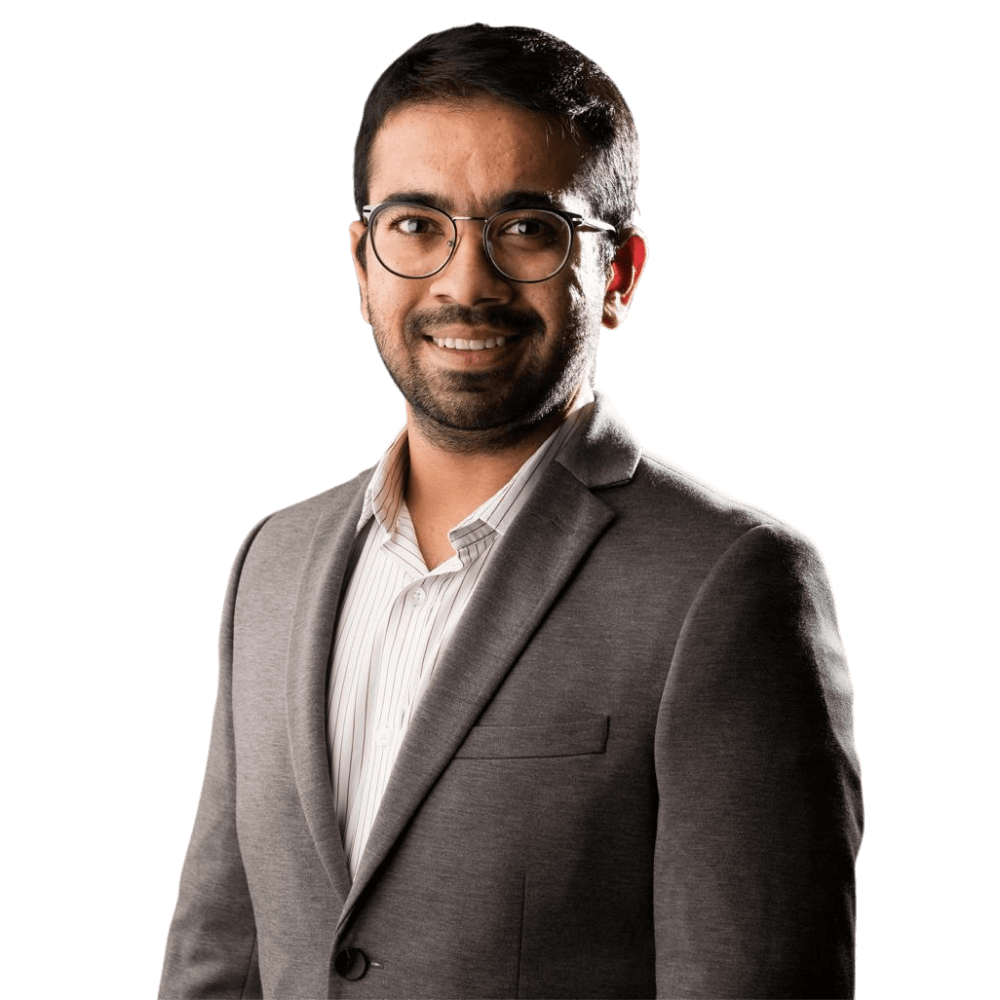
Chief Consultant
Dr. Nisarg Parikh (M.S. Ortho, A.O. Spine Fellow)
Endoscopic-Minimally Invasive Spine Surgeon
Spine Fellowships: India, Italy, Germany
Lumbar Spine
Low back pain is one of the most commonly encountered spine problems. It can involve almost all the age groups. It can arise due to any abnormality in muscles, bones, joints, ligaments or any other soft tissue. The commonest causes are: abnormal posture, weight lifting and lack of exercises. It can also be seen due to trauma, infection and in rare cases tumor.
Back pain can be isolated to a particular area or it can be associated with radiating pain in buttocks or thighs. Acute low back pain gets resolved with analgesics, rest and some light exercises. In cases of chronic low back pain, there can be intermittent episodes of acute low back pain in between. In chronic low back pain, the mainstay treatment is activity modification viz. avoidance of weight lifting, forward bending, posture correction and back strengthening exercises.
Preventive measures like avoidance of heavy weight lifting, back exercises, posture correction especially at your workplace etc. are important for avoidance of back pain.
Detailed assessment by a spine expert with necessary investigations is necessary if one is having a history of persistent low back pain, fall, fever, symptoms like weight loss or loss of appetite in addition to low back pain.
Lower limb radicular pain is commonly known as sciatica. There is pain sensation which goes from lower back down to legs. There can be tingling, numbness or heaviness in legs in addition to pain. Lumbar disc herniation is the commonest cause for lower limb radicular pain. Symptoms can vary, depending upon the level and amount of disc herniation. In large disc herniations there can be weakness of muscles due to excessive pressure on the nerve roots.
Lifting of heavy weight, sports activity, fall are common causes of disc herniation. Initial management consists of analgesics and rest. Spine injections can be opted in some cases where pain is not responding much to analgesics. In cases with major loss of muscle power, loss of control over urine/stool and long-standing disc herniations refractory to conservative management, surgery has to be opted for.
It is a condition of narrowing of the spinal canal leading to encroachment and compression over spinal cord and nerves. Their compression gives rise to symptoms of back pain and neurological claudication. In neurological claudication, a patient feels heaviness/pain/numbness in legs after walking or standing for a certain period of time and gets relieved from sitting or lying down.
Lumbar canal stenosis is the result of a degenerative process happening in discs, joints and soft tissues. Due to ageing there is often thickening or enlargement of these structures in the form of degenerated discs, osteophytes etc. which compresses the nerve roots.
Initial treatment is always in the form of analgesics, activity modification and exercises. Majority of patients get relieved with these conservative measures. If not, spinal injections can be administered. In progressive or severe symptoms, where pain becomes intolerable on walking/standing (with deterioration in the daily activities) & the patient’s condition deteriorates then surgery for decompression has to be performed which can give definite relief from symptoms. In selected cases we offer the treatment of minimally invasive surgery.
This term is used for degeneration seen in the spine, be it cervical/dorsal or lumbar spine. Wear and tear occurs in all parts of the body as age progresses and the same applies to the spine too. Degeneration in spine can involve disc, joints and other bony structures, muscles etc. and this is termed as spondylosis.
Common symptoms of lumbar spondylosis are: back pain, buttock pain, heaviness in legs, restricted movements of back etc. As spondylosis progresses it can lead to spinal canal stenosis. This will give rise to neurogenic claudication.
Treatment of spondylosis consists of activity modification, analgesics and back exercises. Activities like yoga, cycling, swimming, walking etc help in losing weight, build muscles and endurance, thus helping in reducing the intensity as well as the duration of the symptoms of spondylosis.
In this condition there is forward slippage of the upper vertebra over the lower one leading to impingement over the nerve roots present between them. In the lumbar spine it most commonly involves the lower vertebrae. This condition is secondary to degeneration of joints or due to lysis (defect in pars). Due to slippage, the impingement of the nerve roots occur. This causes low-back pain, heaviness and tingling/numbness in legs.
Initial symptom is usually back pain. As the condition progresses there will be more slippage and more impingement over the nerve roots, leading to symptoms of neurological claudication leading to pain, heaviness, tingling-numbness in legs after walking and standing for a few minutes.
Initial treatment consists of analgesics, activity modification, back and core strengthening exercises. However, as the disease progresses, symptoms can worsen and it can lead to disability. In this situation surgery is recommended. in surgery, fixation and stabilization of the involved vertebra is done.
The surgery can also be performed using minimally invasive technique in selected cases.
Cervical Spine
Neck pain is becoming a common condition because of increased usage of mobile phones, laptops and tablets. Any activity in which downward movement/position of neck is required, if done persistently can put strain over neck muscles, vertebral joints and discs. Neck pain can be associated with other symptoms like shoulder pain and upper limb radicular pain.
Majority of these patients are treated with analgesics, physiotherapy and ergonomic training. However, if one is suffering from neck pain which doesn’t get resolved or has symptoms like radicular pain, fever, anorexia; one requires further investigations in form of blood workup or imaging studies.
Just like lumbar spine, in cervical spine also there can be disc herniation which can lead to radicular symptoms due to compression of the nerve root. Symptoms usually have acute onset following history of jerk, lifting of heavy weight or fall. Patient will have neck pain along with upper limb radicular pain in area supplied by that particular nerve root. Also, there will be tingling, numbness or sensation of weakness in arms.
In majority cases, after confirmed diagnosis on radio-imaging studies; management is done with analgesics, rest, collar support and physical therapy. Majority patients become better in period of 4-6 weeks. However, if symptoms are severe, persistent or if there is significant loss of arm functioning; further intervention can be required. It can be in form of pain management procedures like injections or in some cases surgery.
Surgery can be performed either through anterior mini open approach or posterior minimally invasive approach and both of them are performed under microscope/loupe magnification.
Spinal cord compression at the cervical spine region can give rise to this condition. Patients with this condition can present with symptoms like tingling numbness in hands-feet, heaviness, imbalance while walking, difficulty in brisk walking, difficulty in fine movements (tying buttons of clothes, lacing up shoes etc.), weakness in hand grip, weakness in leg or hand movements etc.
There are several causes of spinal cord compression. Common causes are: disc herniation; thickening of ligaments, joints, discs etc. secondary to degeneration; instability of the cervical vertebra etc. The compression of the spinal cord causes changes in spinal cord which are visible in MRI as well. After the process of cord changes starts, if compression is not relieved then damage becomes progressive and irreversible as well.
Conservative management (medicines, physiotherapy) has role only in initial stages. Once there is appearance of symptoms like imbalance, weakness and signs of cord changes on MRI; surgery to relieve the compression becomes inevitable. In such cases if not addressed on time, this condition can progress and make a person wheelchair bound or can affect control over urine and stool. The goal of the surgery here will be to stop the progression of symptoms.
Others
Spine is frequently affected with infection. It can involve bony structures as well as disc, muscles and ligaments. In India the commonest spine infection is tuberculosis. There can also be infection because of bacteria or fungi.
Patients with spine infections will usually present with pain (back pain/neck pain), fever, loss of appetite/weight etc. Sometimes in advanced cases of infection, there can be deformity or even weakness in arms or legs (paralysis).
All the suspected cases require biopsy to confirm the diagnosis. Biopsy is performed under local anesthesia with IITV control. It helps to identify the organism which has caused infection and to decide on antibiotics. Majority of the cases if diagnosed early can be managed with the help of antibiotics, rest and analgesics.
Some cases may require surgery in case of huge pus collection, weakness (paralysis) in body or deformity.
spine fractures can be seen in young population after high velocity injury/fall or in older population after trivial injury if there is osteoporosis (weakness of bones).
In young population, treatment of spine fractures depends upon fracture morphology and fracture location. In minor cases treatment consists of rest, pain management and brace support. In major fractures or if there are neurological deficits; surgery in form of fixation and decompression of the spinal cord. In older population, fractures due to osteoporosis requires medical management of the osteoporosis apart from management protocols of the fracture.
These terms are used when there is loss of normal spine alignment. When there is abnormal sideways deviation of spine it is called scoliosis whereas Kyphosis is spinal hump. More often these two conditions co-exist in one person. In children, it is usually because of developmental problems or it can be because of congenital abnormalities in the spine. In mild/early cases brace support and physiotherapy can be helpful. However, if the deformity is progressive and/or causing impairment to any function it will require surgery to correct the abnormal curve.
Another reason for deformity can be previous history of trauma, infection. Depending upon the severity of curve and neurological function; surgery can be required.
Degeneration of spine (in elderly) can also lead to deformity. Symptoms can be back pain, lower limb radicular pain, tingling numbness sensation, walking/standing/sitting difficulties. These symptoms are due to nerve root compression which is secondary to deformity. Majority of the cases can be initially managed by brace support, analgesics and physiotherapy. However, if the symptoms do not get resolved then it may require surgical intervention in form decompression of the involved nerve roots with or without fixation.
At ‘Swasti’ majority of our patients are treated with the help of non-surgical treatment options. Medicines and Physiotherapy constitute the mainstay of such treatment.
We always ensure the safety of our patients while giving pharmacotherapy (Medicines) and aim to prescribe them with least/no side effects.
Physiotherapy is an important aspect of non-surgical management. However more important is to decide the protocol. Our spine expert Dr. Nisarg Parikh designs physiotherapy protocol as per the patient’s conditions and demands. We have team of expert physiotherapists affiliated with us who will execute all the exercise protocols effectively for non-surgical as well as post-operative patients.
Many cases may not respond to non-surgical treatment. However, before going for surgical options we have different pain management procedures being provided at ‘Swasti’.
Many conditions like disc prolapse, facet joint arthritis can be treated with pain management procedures. It has several advantages
- Performed under local anesthesia
- Doesn’t require hospitalization
- Can be offered in patients who are high risk for surgery (e.g. suffering from cardiac conditions, diabetes etc.)
- No side effects
Surgical treatment is usually offered when all options of non-surgical treatment have been exhausted. At ‘Swasti’, we offer surgical treatment of all kind of spine related disorders.
- Micro Endoscopic Discectomy for disc herniation
- Spine Fracture Fixation
- Decompression for spinal stenosis
- Spine Fusion procedures for degenerative conditions
- Deformity correction
- Surgery for spine tumor
- Spine infection surgeries
- Spine biopsy
- Spine Endoscopy
At ‘Swasti’ we perform various spine surgeries with Minimally Invasive techniques. It has several advantages over conventional spine surgeries which are as follows:
- Minimum Scar
- Minimal muscle and bone dissection
- Minimal blood loss
- Shorter hospital stay
- Faster recovery
- Minimal Post-operative Pain
- Back to pain-free lifestyle and work in short span
What Is MISS?
It is a technique through which surgery is performed using minimum dissection and optimum access to the targeted area leading to minimal normal tissue/bone disruption and at the same time target oriented approach.
How it is done?
It can be performed via two techniques namely
- Tubular retractor system: Here dilator is docked(placed) over desired area and is fixed with a flexible arm. Surgery is performed by passing instruments through the tube under magnification.
- Endoscopic technique: the principle here is the same as laparoscopic surgery. Cannula is inserted over the desired area through which the endoscope is passed. The image is received on a screen and surgery is performed by passing instruments through the scope.
Advantages:
- Minimal blood loss
- Chances of Infections are very less
- Minimal tissue (muscle and bone) damage
- Less post-operative pain
- Faster recovery and shorter hospital stay
- As it is a target-oriented procedure and performed under magnification chances of neurological damage are less
Disadvantages:
- These techniques may not be performed in certain cases because of technical considerations; which can be anatomical or functional.
It is meant for cutting the bone with high precision
The drill speed can go as high as 80,000 RPM and the burr tips are available in different diameters.
As compared to conventional bone cutting, drill/ burr provides several advantages
- Burr tips are available in different diameters, so they can be used in different areas of spine and pathologies accordingly
- Cutting of bone is precise
- Diamond tipped burr not just cuts the bone, but also reduces bleeding from the cut section
- Helps in decreasing the operative time duration
Pitfalls
- It has to be handled with utmost care while operating in close proximity with nerves. But, with skillful handling, this complication is easily avoidable. (We have the latest burr handle designed to provide better grip and facilitate safe use.)
The ultrasonic Bone Scalpel is a tissue-specific device that allows the surgeon to make precise osteotomies (cutting of the bone) while protecting collateral or adjacent soft tissue structures. The device is comprised of a blunt ultrasonic blade that oscillates at over 22,500 cycles/second with an imperceptible microscopic amplitude.
The more compliant adjacent soft tissue is not affected by the ultrasonic oscillation which is the major advantage of this tool.
These devices provide magnification up-to 4 times with better illumination of the operative field
Advantages
- Magnification leads to better identification of neural structures, making their handling easy and safe, reducing the complication rates significantly
- Illumination and magnification together lead to better identification of any pathological structure (e.g. herniated disc fragment). This increases the surgical accuracy
Intraoperative neurophysiological monitoring (IONM) or intraoperative neuromonitoringis the use of electrophysiological methods to monitor the functional integrity of certain neural structures (e.g., nerves, spinal cord and parts of the brain) during surgery. The purpose of IONM is to reduce the risk to the patient of iatrogenic damage to the nervous system, and/or to provide functional guidance to the surgeon and anesthesiologist.
How it is done:
To accomplish these objectives, a member of the surgical team with special training in neurophysiology obtains and co-interprets triggered and spontaneous electrophysiologic signals from the patient periodically or continuously throughout the course of the operation. In general, a trained neurophysiologist attaches a computer system to the patient using stimulating and recording electrodes. Interactive software running on the system carries out two tasks:
- selective activation of stimulating electrodes with appropriate timing, and
- processing and displaying of the electrophysiologic signals as they are picked up by the recording electrodes.
The neurophysiologist can thus observe and document the electrophysiologic signals in real time in the operating area during the surgery. The signals change according to various factors, including anesthesia, tissue temperature, surgical stage, and tissue stresses.
Who are benefitted the most: patients undergoing complex spine procedures such as Deformity (scoliosis, kyphosis) correction ; spinal cord tumor surgeries have highest risk for postoperative neurological deficits. Using Neuromonitoring in such patients reduces such risk to greater extent.
Disadvantages: There is no side effects/disadvantages of this system.
Testimonials
 My name is Anjumbanu and since the last 1.1 & half years I have been struggling with back
pain
& as I am a working woman, it has become a hurdle in my everyday life. We have our relatives
in ahmedabad who gave us Dr. Nisarg’s reference. I was back on my feet within 2 days of the
surgery and within a month i was back to my normal everyday activity. Dr. Nisarg is really
good
at his work and the Staff at swasti is really wonderful. I would like to share with everyone
that
surgery is no big deal & it is very convenient. It not only gives you your life back but
also returns
your lost confidence.
My name is Anjumbanu and since the last 1.1 & half years I have been struggling with back
pain
& as I am a working woman, it has become a hurdle in my everyday life. We have our relatives
in ahmedabad who gave us Dr. Nisarg’s reference. I was back on my feet within 2 days of the
surgery and within a month i was back to my normal everyday activity. Dr. Nisarg is really
good
at his work and the Staff at swasti is really wonderful. I would like to share with everyone
that
surgery is no big deal & it is very convenient. It not only gives you your life back but
also returns
your lost confidence.
Anjumbanu Mansuri
I have been suffering from back pain issues since the last 5 years and during the lockdown
it
increased a lot, so much so that even if i’d use the loo, I would have to lay down for an
hour to
be able to walk again. Sitting , Standing, lifting weights all of that had become difficult
for me.
Based On Dr. Nisarg’s recommendation I went ahead for the surgery, and from the very next
day post surgery , I started feeling better. I'm feeling good and I'm able to do all the
things that I
missed out doing earlier. Dr. Nisarg & the team are very supportive and they make sure that
we
recuperate well and get back to our normal lives at the earliest.
Alka Thakkar
Due to a back pain issue, I got operated few months back, the surgery was not successful &
the
doctor had to reoperate me again due to brain fluid discharge from the spine, my earlier
doctor
made me take up a lot of test , MRIs, X-rays , in spite of which I had no relief and as I
had no
mediclaim, being the only earning member I was financially drained. When my condition
worsened , he asked me to undergo a third surgery. That's when my brother called me to
Ahmedabad & we consulted Dr. Nisarg. Dr. Nisarg not only treated me at half the price of
what
other doctors quoted that too in a very short duration, he gave me confidence and strength
too.
For me he is like God, who gave me a second lease at life & I can't thank him enough.
Dharmesh Panchal
When I developed a back condition I consulted Dr. Parik tried to heal me without a surgery
with
certain injections & medication, I felt good but after 2 months the condition returned. This
time
we went in for a surgery and I felt alright within a day, the same evening I went to the
washroom
on my own and the next day I was able to walk around. Today it's been a month & i am
perfectly
all right. I just want to share my experience with people that science has progressed a lot
Jayeshbhai Pandya
Before the operation I was just not able to walk and my entire back was twisted. Today my
spine
is straight after the operation & within 8 days Dr. Nisarg made me stand up. I can walk
straight
now, its just been a month and 10 days, but now I can do everything. People warned us
against
the surgery but we are glad we took Dr. Nisarg’s help. Today I am happy about being a normal
person. Thank you so much to the whole team of swasti.
Shyam


